

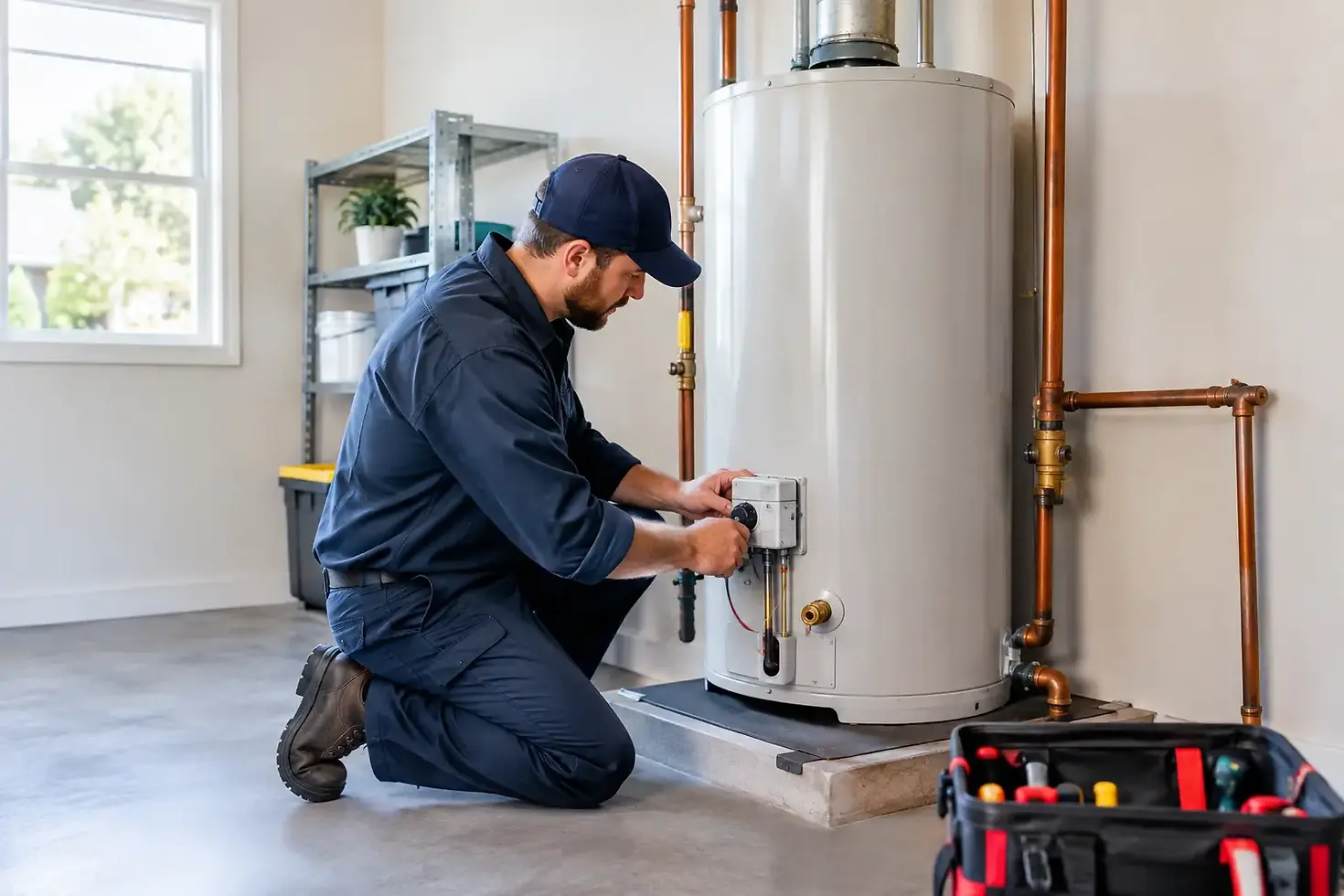
Water Heater Replacement Guide for Stafford Homes
A cold shower is usually the first warning, but it is rarely the only one. This water heater replacement guide helps Stafford-area homeowners decide whether it is time for a new unit, what to buy, and what a correct installation should include. A water heater is not a place to guess. It connects water, fuel or electricity, venting, drainage, and safety controls in one small area of your home.
When Water Heater Replacement Makes More Sense Than Repair
A repair can be the smart move when the problem is limited and the tank is still in good shape. A failed heating element in an electric unit, a worn thermostat, or a pilot and burner issue on a gas model may be repairable. But age, corrosion, and leaks change the conversation quickly.
Most traditional tank water heaters last roughly 8 to 12 years, though water quality, maintenance, installation conditions, and household demand all affect that range. Check the serial number on the manufacturer label if you are unsure of the unit's age. If your heater is approaching or past that range, put replacement on your radar before a small problem turns into water damage.
A leak at a pipe connection or the temperature and pressure relief valve may be repairable. Water coming from the tank body itself is different. Rust usually means the inner tank has failed, and the practical answer is replacement. Do not ignore a small puddle around the base. A tank can hold 40 to 80 gallons or more, and a full failure can damage flooring, walls, stored belongings, and nearby equipment.
Other signs worth taking seriously include rusty hot water, rumbling or popping sounds, inconsistent water temperature, and less available hot water than your household needs. Sediment can make a heater noisy and less efficient. It may also speed up wear on the tank. If repairs are becoming frequent, putting more money into an aging heater often does not make financial sense.
Choose the Right Type and Size
The best replacement is not automatically the biggest tank or the most expensive model. It needs to match your home's fuel source, available space, venting setup, budget, and daily hot-water demand.
Conventional tank water heaters
A standard storage-tank heater is the familiar choice for many homes in Stafford and Northern Virginia. It stores heated water in a tank, offers predictable performance, and usually has a lower upfront installation cost than a tankless system. Tank units are available in gas and electric models, but the right choice depends on what the home already has and whether the existing connections can safely support the new equipment.
Tank size matters. A one- or two-person household may do well with a smaller tank, while a larger family with back-to-back showers, laundry, and dishwasher use may need 50 gallons or more. A unit that is too small creates morning frustration. A unit that is much larger than necessary can cost more to buy and heat.
Tankless water heaters
Tankless units heat water on demand rather than storing it. They can save space and provide a continuous supply of hot water when sized correctly. They are often a good fit for households that want to reduce standby heat loss or need more usable hot water without adding a larger tank.
The trade-off is that tankless installation is more involved. A gas tankless system may require changes to gas piping, venting, electrical service, and condensate drainage. An electric tankless unit can require substantial electrical capacity. A tankless water heater is a strong option in the right home, but it is not always a simple swap for an existing tank.
Heat pump water heaters
Heat pump water heaters use electricity differently than standard electric tank models. They pull heat from surrounding air and can be very efficient, especially in a suitable utility room, basement, or garage. However, they need adequate space and air circulation, can make some noise, and may cool the room around them. They also have a higher initial cost. For some homeowners, the long-term operating savings are worth it. For others, a conventional replacement is the more practical choice.
What a Proper Replacement Should Include
Water heater replacement is more than setting a new tank in the same spot. The installation should address the details that protect your home and help the equipment operate as intended.
The old unit needs to be disconnected, drained, and removed safely. The new heater should be checked for proper clearances, stable placement, correct water connections, and accessible service controls. In many installations, especially where a leak could damage finished areas, a properly piped drain pan is a wise safeguard.
For gas water heaters, safe venting and combustion air are critical. The gas connection must be installed and tested correctly, and the vent system must be compatible with the new appliance. Never assume the old vent arrangement is automatically right for a new heater. Changes in equipment type, efficiency, or location can affect what is required.
For electric units, correct voltage, breaker sizing, wiring, and grounding matter. Electrical work that looks fine from the outside can still create a fire or shock hazard if it is not done correctly.
Every water heater also needs a properly installed temperature and pressure relief valve with a discharge pipe directed to an appropriate location. This is a safety device, not an optional accessory. Do not cap it, plug it, or treat occasional discharge as something to ignore. If it is releasing water, have the cause checked.
Local requirements can also affect the job. Depending on the installation and property, permits, expansion tanks, seismic strapping, venting upgrades, or other code-related items may apply. A qualified plumber can evaluate the existing setup instead of treating replacement as a one-size-fits-all job.
Prepare Before the Installer Arrives
A little preparation makes replacement day easier. Clear a path from the entry door to the water heater location, including stairs, hallways, and the utility area. Move stored boxes, cleaning supplies, and anything that blocks access to shutoff valves or the electrical panel.
It also helps to know what has been happening with the old unit. Mention whether you have seen leaking, smelled gas, noticed discolored water, heard unusual noises, or experienced repeated temperature problems. If you know the tank size and fuel type, share that information when requesting a quote.
If the water heater is actively leaking, shut off the cold-water supply valve above the unit if you can do so safely. For a gas smell, leave the area, avoid switches and open flames, and contact the gas utility or emergency services as appropriate. Do not try to diagnose a suspected gas leak yourself.
Questions That Help You Compare Quotes
A free quote should give you a clear picture of the work, not just a price for a water heater. Ask whether the quote includes removal and disposal of the old unit, installation materials, code-related upgrades that are known at the time, startup testing, and warranty information. If your heater is in a tight closet, attic, crawl space, or finished area, make sure the access conditions are part of the discussion.
You should also ask why a particular size and type are being recommended. A good answer considers your household's actual use, not just what happened to be installed before. If you are considering tankless or heat pump equipment, ask what changes to venting, gas, electrical, or drainage may be needed. The lower price is not always the lower-cost choice if critical work has been left out.
After Your New Water Heater Is Installed
Once the installation is complete, keep the area around the heater clear and dry. Check periodically for drips at connections, listen for unusual sounds, and test that you have steady hot water at fixtures throughout the home. Set the temperature to a safe, practical level. Many households choose around 120 degrees Fahrenheit, though individual needs and manufacturer guidance should be considered.
Routine maintenance can extend the life of your new equipment. Depending on the unit and water conditions, that may include checking the anode rod, flushing sediment, and having gas components or venting inspected. Maintenance is cheaper and less stressful when it is planned instead of performed during an emergency.
A new water heater should bring dependable hot water and peace of mind, not a fresh list of worries. When it is time to replace yours, choose an installer who looks at the whole job, explains the options plainly, and stands behind the work. If you want it right, call WHITE!


Comments