

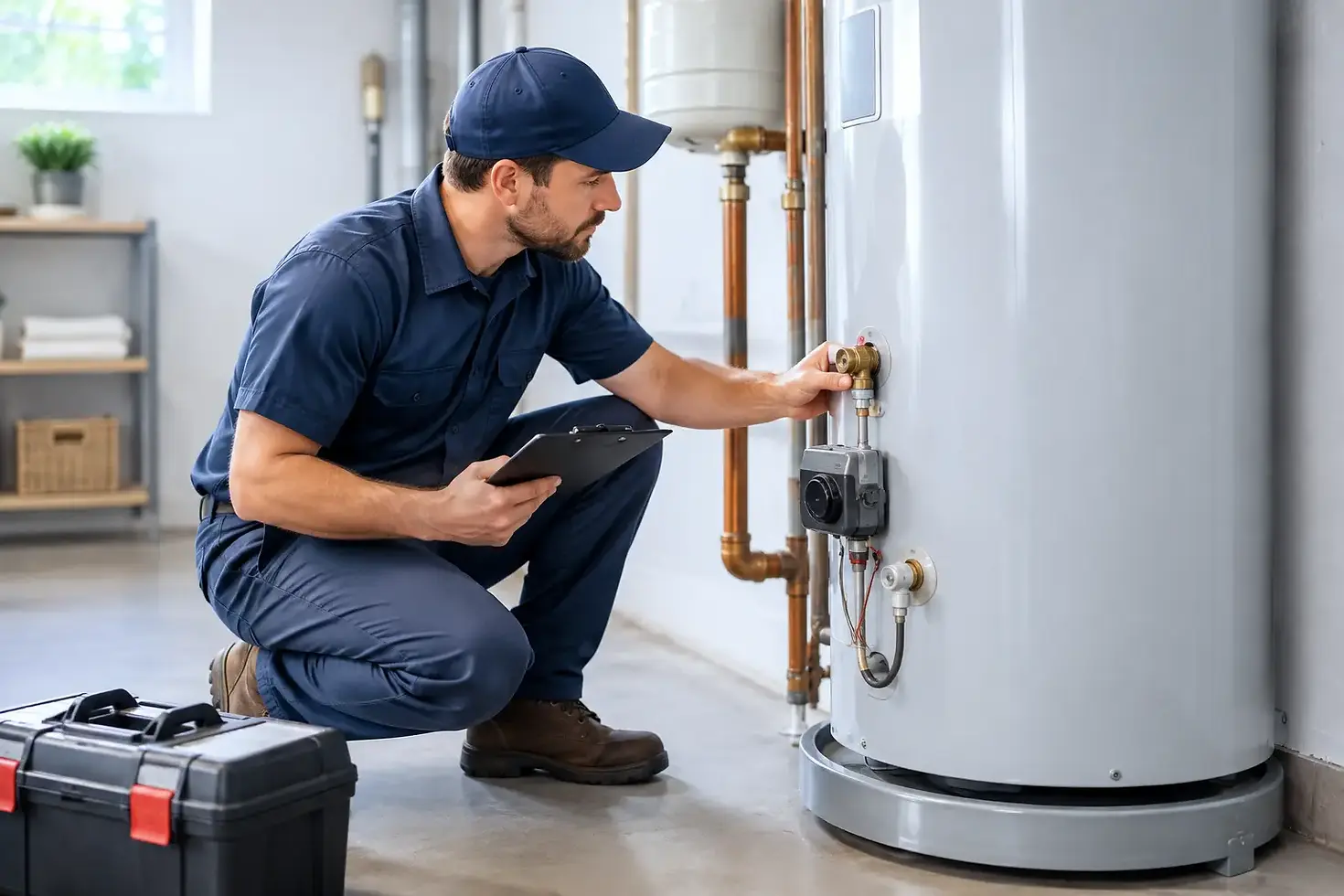
Water Heaters: Repair, Replace, or Maintain?
A cold shower is often the first sign, but water heaters usually give homeowners other warnings before they quit completely. Rust-colored water, a puddle near the tank, rumbling noises, or hot water that runs out too fast can all point to a problem that needs attention. Acting early may turn an urgent replacement into a straightforward repair.
For Stafford-area homeowners, landlords, and small-business owners, the right answer depends on the heater’s age, condition, fuel source, and how much hot water the property actually needs. A good plumbing decision is not always about choosing the newest or most expensive unit. It is about getting dependable hot water and an installation that is done correctly.
When Water Heaters Need Attention
A water heater works quietly in the background, so small changes are easy to ignore. That can be costly when a minor issue becomes a leak, water damage, or a complete loss of hot water. Pay attention when the water temperature becomes inconsistent, the unit takes longer than usual to recover, or the pilot light will not stay lit on a gas model.
Water around the base of a tank deserves a closer look. Sometimes the source is a loose connection, a relief valve, or a drain valve that can be repaired. Other times, the tank itself has corroded from the inside. A leaking tank generally cannot be repaired safely or reliably, and replacement is the practical choice.
Strange sounds matter, too. Popping, crackling, or rumbling often comes from sediment built up in the bottom of a tank. Mineral deposits make the system work harder and can shorten its service life. Flushing may help if the tank is still in good condition, but heavy sediment in an older unit can be a sign that replacement is getting closer.
Repair or Replacement: What Makes Sense?
There is no single age at which every heater must be replaced. Many traditional tank water heaters last roughly eight to 12 years, though water quality, maintenance, installation quality, and daily use all affect that timeline. The manufacture date on the unit’s serial number label can help establish its age.
Repair can make sense when the heater is fairly new and the problem is limited to a replaceable part. Heating elements, thermostats, pressure relief valves, igniters, thermocouples, and some connections can often be repaired without replacing the whole unit. An electric heater that has stopped producing enough hot water may have a failed element. A gas heater with an unreliable pilot may have an ignition or control issue. Those are situations worth diagnosing before assuming the tank is finished.
Replacement becomes more reasonable when the tank is leaking, the unit is approaching the end of its expected life, repairs keep adding up, or hot water demand has changed. A growing family, a renovated bathroom, a rental turnover, or a small business adding sinks can expose that an older heater is no longer sized for the job.
The least expensive repair is not always the best value. Putting significant money into an aging heater may only delay the next problem. On the other hand, replacing a newer unit without identifying the actual issue can waste money. A proper evaluation should look at the whole system, not just the symptom.
Tank or Tankless?
Traditional tank heaters store a set amount of hot water and remain a solid choice for many homes. They are familiar, straightforward, and available in different capacities. The key is choosing a tank large enough for the household’s busiest hour, not simply matching the old unit’s gallon size.
Tankless water heaters heat water as it flows, which can provide a longer supply of hot water when properly sized. They can be a good fit for some homes, but they are not automatically the right choice for every property. Gas tankless units may require changes to venting or gas piping. Electric tankless units can require substantial electrical capacity. Installation conditions, incoming water temperature, and the number of fixtures used at once all matter.
For either style, correct sizing is more important than sales language. A unit that is too small will disappoint during morning showers or when the dishwasher and laundry are running. A unit that is oversized can cost more upfront and may not deliver a meaningful benefit.
Choosing the Right Replacement Water Heater
Before replacing a unit, consider the details that affect daily performance. Start with the fuel type already available at the property. Gas, electric, and propane systems have different requirements, and changing fuel sources can add cost and complexity. It may be worthwhile in some cases, but it should be planned rather than treated as a quick swap.
Next, consider household use. Two people with one bathroom have very different hot water needs than a family using multiple showers before school and work. A rental property may need a dependable, conventional setup that is easy for future owners or tenants to manage. A small commercial space may have a specific demand pattern based on restrooms, sinks, or cleaning needs.
Efficiency is part of the equation, but it should be weighed against installation costs and expected use. A more efficient model can reduce energy use over time, yet the right choice depends on the home and how long the owner expects to keep the property. A Master Plumber can assess the existing setup, code requirements, venting, drain pan needs, shutoff valves, and discharge piping before recommending a replacement.
Installation Details That Should Not Be Overlooked
A water heater installation is more than connecting water lines and turning on the power. Gas units must have safe venting and properly sized gas connections. Electric units need appropriate wiring and disconnects. Temperature and pressure relief valves must discharge correctly. In many locations, drain pans, expansion tanks, seismic restraints, or other components may be needed based on the installation and local requirements.
These details protect the property and help the heater perform as intended. Poor connections can leak. Incorrect venting can create a serious safety issue. A missing or improperly installed relief valve discharge line can turn a routine failure into a dangerous one. This is why water heater work is best handled by a qualified plumbing professional instead of treated as a basic appliance changeout.
Simple Maintenance That Can Extend Service Life
A little attention can help a tank water heater last longer and operate more efficiently. Check the area around the unit periodically for moisture, corrosion, or unusual sounds. Keep storage and clutter away from the heater, especially around gas equipment. If the relief valve discharge pipe is dripping, do not cap it or ignore it. Have the cause checked.
For many tank units, periodic flushing can reduce sediment buildup. The correct interval depends on local water conditions and the heater’s age. An anode rod can also help protect the tank from corrosion, but it wears out over time and may need inspection or replacement. Older tanks require extra care, since disturbing heavy sediment can sometimes reveal existing weakness.
Do not set the temperature excessively high in an effort to make hot water last longer. Water that is too hot increases scald risk and can waste energy. If hot water is running out, the better solution may be a repair, a correctly sized replacement, or changes to household use patterns.
What to Do When the Hot Water Stops
If there is no hot water, check for obvious signs without taking unnecessary risks. Look for water around the unit, note any error display, and see whether the breaker has tripped on an electric model. If you smell gas, leave the area, avoid switches or flames, and contact the gas utility or emergency services as appropriate.
Do not attempt to bypass safety controls, cap a relief valve, or keep operating a heater with an active tank leak. Shut off the water supply to a leaking unit if you can do so safely, then arrange for professional service. Quick action can limit damage to flooring, walls, and nearby belongings.
Hot water should be dependable, not something you have to plan your day around. Whether the problem is a failing part, an aging tank, or a heater that was never right for the property, getting a clear diagnosis and a free quote gives you a practical path forward. For work completed with local accountability, White Plumbing Company stands by a simple promise: “If you want it right, call WHITE!”


Comments