

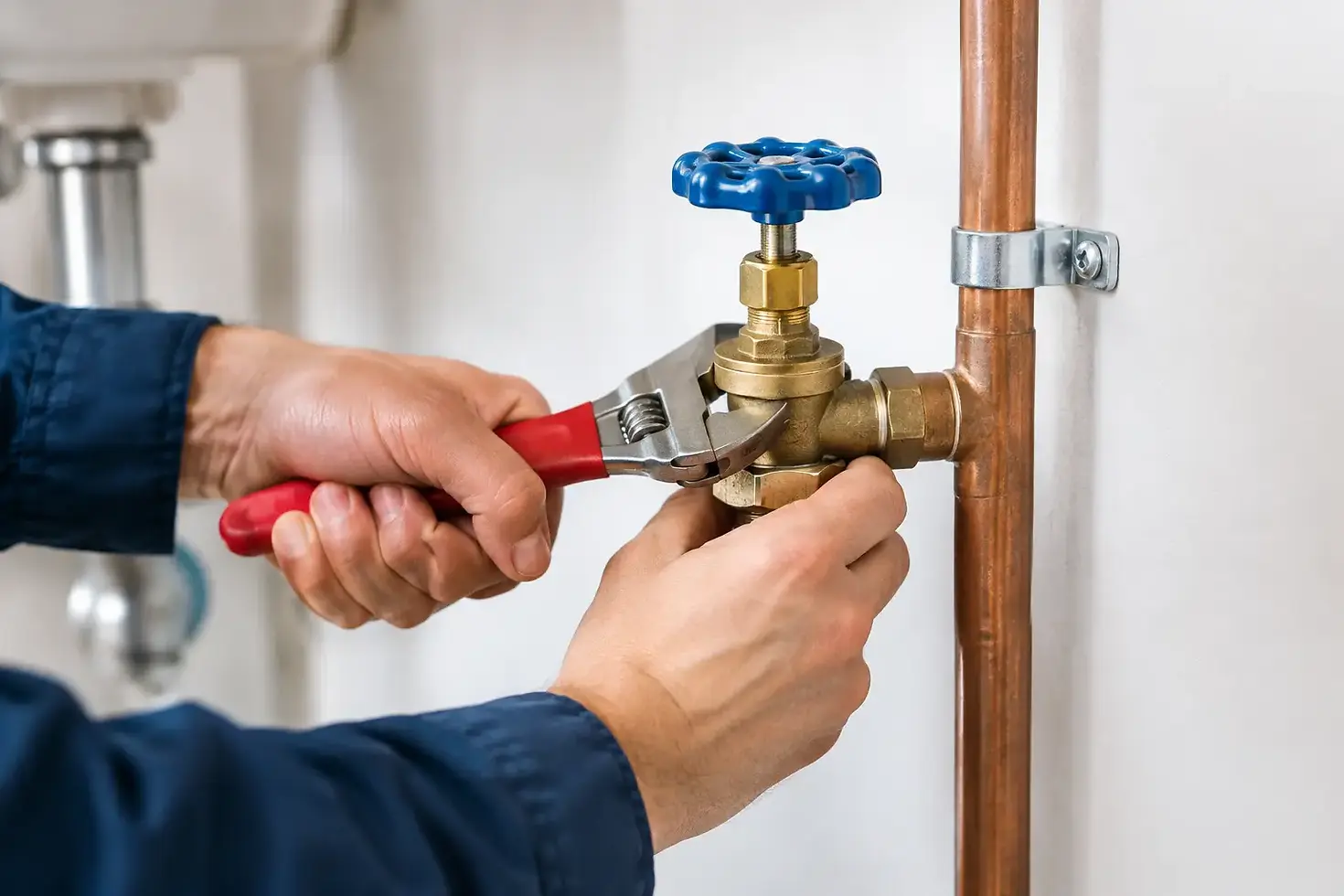
Shutoff Valve Replacement Before a Leak Spreads
A shutoff valve is easy to ignore until water is running across a bathroom floor, under a kitchen sink, or through a ceiling below. When a toilet supply line fails or a faucet starts leaking, the ability to stop the water immediately can limit a small repair to a manageable problem. Shutoff valve replacement is not glamorous plumbing work, but it is one of the most practical ways to protect a home, rental property, or small business.
A valve that will not turn, drips around the handle, or fails to fully stop the water is not doing its job. Waiting for it to become an emergency usually means more damage, more disruption, and more expense. Replacing a failing valve before that moment gives you control when it matters.
What a Shutoff Valve Does
Shutoff valves control water flow to a specific fixture or section of plumbing. Most homes have a main water shutoff that stops water to the entire building, along with smaller fixture shutoffs at toilets, sinks, washing machines, water heaters, and ice maker lines.
The small valves near individual fixtures are often called stop valves. They allow a plumber to repair a toilet, replace a faucet, or service an appliance without turning off water to the whole house. That convenience matters, but their bigger purpose is emergency protection. If a supply line bursts, a working valve can stop the flow in seconds.
The main shutoff is just as important. Every homeowner, tenant, landlord, and business operator should know where it is located and whether it actually works. In many Stafford-area homes, the main valve is near the water meter, in a utility room, basement, crawlspace, or where the water line enters the building. Its location depends on the home and its age.
Signs You Need Shutoff Valve Replacement
A valve can look fine from the outside and still be unreliable. The clearest warning sign is a valve that does not fully shut off the water. If you close a toilet or sink valve and water continues flowing to the fixture, the valve needs attention before work can be done safely.
Leaks are another common signal. Water around the handle, stem, connection, or valve body may appear only when the valve is turned. Some leaks are caused by a worn internal seal, while others come from corrosion or a damaged connection. Tightening a packing nut may stop a minor stem drip in some cases, but it does not repair a valve that is worn out, seized, or badly corroded.
Watch for these common problems:
The handle is frozen, difficult to turn, or breaks when moved.
The valve turns but water does not shut off completely.
Water drips from the handle, body, or nearby connection.
Rust, mineral buildup, green corrosion, or pitting is visible.
The valve has been in place for years and has never been tested.
Do not force a stuck valve. Older multi-turn valves can seize after years of sitting in one position. Excess pressure can crack the valve, damage the connected pipe, or create an immediate leak. A valve that will not move is a good reason to call for service before you need it in an emergency.
Why Older Valves Cause Trouble
Many older homes have multi-turn stop valves with a rubber washer inside. These valves were common for years, but they can wear down, corrode internally, and become difficult to operate. Mineral-heavy water can make the problem worse by leaving deposits inside the valve.
Quarter-turn ball valves are often a better replacement choice. They use a handle that turns 90 degrees from on to off, making their position easy to see. Quality ball valves are generally dependable and provide a positive shutoff when installed correctly. Still, the right replacement depends on the pipe material, available space, fixture connection, and condition of the existing plumbing.
That is why valve replacement is not always a simple swap. A valve connected to copper pipe may require a different method than one on PEX, CPVC, or galvanized pipe. If the pipe is corroded, poorly supported, or too short after the old valve is removed, the repair can expand beyond the valve itself.
Main Shutoff Valves Deserve Attention Too
Fixture valves receive attention when a toilet or faucet needs repair. Main shutoff valves are more likely to be forgotten because they are used less often. That can create a serious problem when a pipe suddenly leaks and the main valve will not close.
A good rule is to locate the main shutoff before an emergency happens and test it carefully from time to time. Turn it slowly, then confirm that water flow stops at a nearby faucet. If the valve is stiff, leaking, or unable to stop water, schedule an evaluation rather than assuming it will work later.
For homes with a water heater, confirm that the cold-water supply valve is accessible and functional as well. If a water heater leak develops, shutting off the incoming cold water can help control the situation. The gas or electrical supply may also need professional attention depending on the equipment and the problem.
What Happens During a Professional Replacement
The work starts by identifying which valve is failing and confirming that water can be shut off safely. For a fixture valve, that may mean using the home’s main shutoff. If the main valve is the problem, a plumber may need to coordinate shutoff at the meter or use another appropriate method based on the property’s plumbing setup.
After the water is off and pressure is relieved, the old valve is removed. The replacement method depends on the piping material and the condition of the line. A proper installation includes selecting a compatible valve, making a secure connection, restoring water, and checking carefully for leaks.
The final test matters. The new valve should open smoothly, close fully, and remain dry at the handle and connections. The fixture should also operate normally once water is restored. A valve that is technically installed but difficult to reach or not fully tested does not offer much peace of mind.
When to Call Instead of Waiting
Call for help promptly if a valve is actively leaking, if you cannot stop water to a leaking fixture, or if a shutoff valve breaks while you are trying to use it. Put a bucket or towels under a minor leak if it is safe to do so, and avoid repeatedly turning a damaged valve back and forth.
It also makes sense to replace valves during related plumbing work. If you are installing a new toilet, replacing a faucet, updating a washing machine connection, or repairing a water heater line, that is often the right time to address an old shutoff. Doing the work while access is open can prevent a separate service call later.
Rental property owners and small-business operators should pay particular attention to valves in areas used by customers, employees, or tenants. A failed supply line in a restroom, break room, or utility area can interrupt operations quickly. Working shutoffs help reduce the time water is left running while repairs are arranged.
A Small Repair That Protects the Rest of the Property
The value of a shutoff valve is measured during the few minutes when something goes wrong. A dependable valve gives you a way to contain a leak before water reaches flooring, cabinets, drywall, inventory, or electrical areas. It cannot prevent every plumbing problem, but it can make the difference between a repair and a major cleanup.
If you have valves that are seized, corroded, leaking, or simply untested for years, do not wait for a burst line to find out they have failed. White Plumbing Company provides practical plumbing repairs backed by Master Plumber expertise. If you want it right, call WHITE! A working shutoff today can save a great deal of trouble tomorrow.


Comments